Visiting Katla Ice Cave in Summer and Autumn
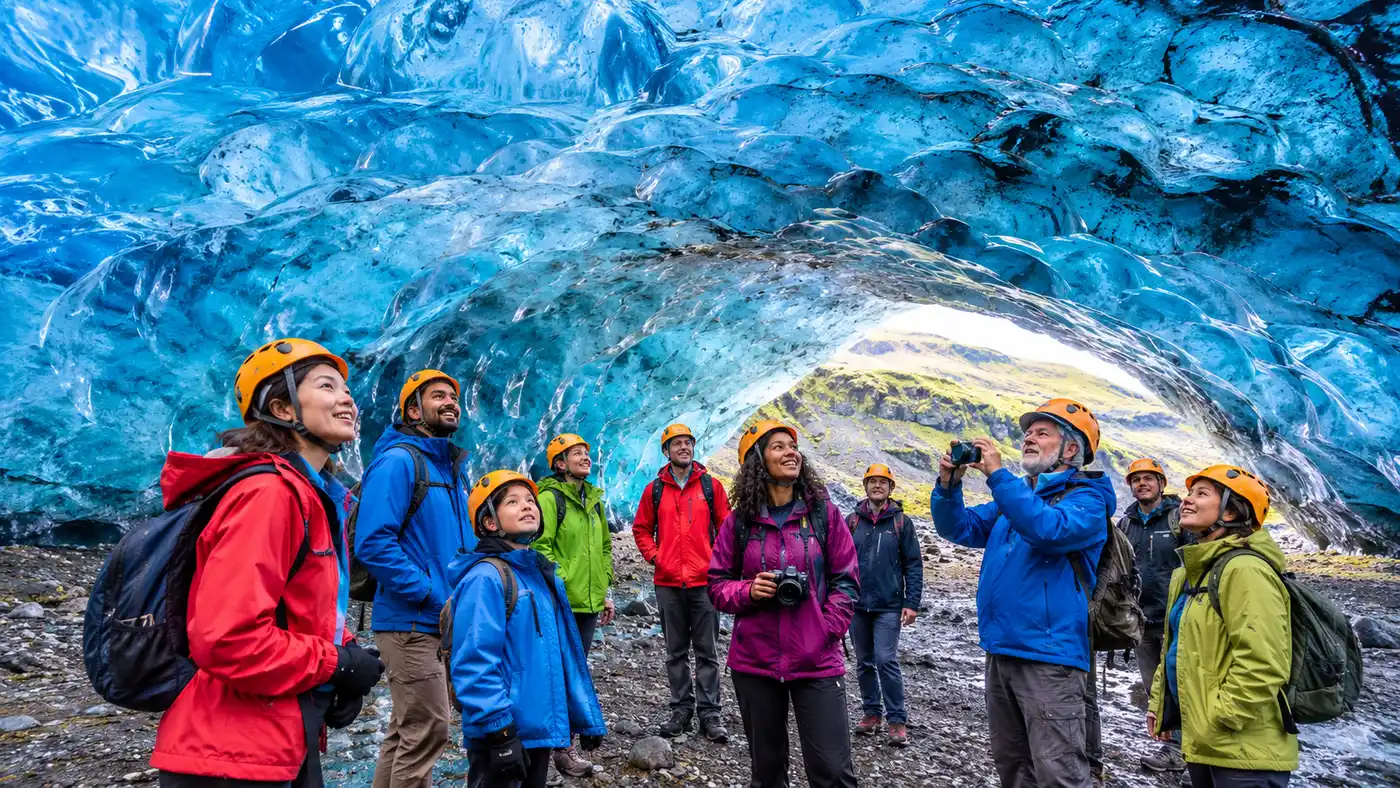
Most travelers assume you can only step inside an Icelandic glacier between November and March. That rule holds true for Vatnajökull and the sapphire blue caverns along the southeastern coast, but a katla ice cave summer adventure breaks the mold entirely. Hidden under Kötlujökull, an outlet glacier of the hulking Mýrdalsjökull ice cap, this cave stays open every single month of the calendar year.
Summer and autumn bring distinct personalities to the ice. In July you walk through dripping tunnels surrounded by bright mossy mountains outside, while October coats the gravel tracks in black frost and brings the first whispers of the auroras overhead. If you plan to visit south Iceland outside the winter freeze, the seasonal shift changes everything from road conditions to how the walls look under your headlamp.
Book your katla ice cave tour experience:
Why a Katla Ice Cave Tour Summer Run Even Exists
Glaciers melt furiously under twenty-four hours of summer daylight. Most ice caves simply collapse or drown in torrential meltwater rivers by mid-May. Katla behaves differently because of volcanic grit. The Katla volcano sits directly beneath the ice sheet, and its historical eruptions have coated the glacier in thick strata of basalt tephra over hundreds of years.
Black ash acts like an insulating blanket. Deep inside Kötlujökull, these ash layers shield the ancient ice from direct sunlight and slow down the thermal erosion that destroys pure blue winter caves elsewhere. The cave system is carved by geothermal heat and subglacial streams rather than warm surface air alone. It is what makes an ice cave iceland summer excursion an actual possibility while other sites are closed off behind safety tape.
It is messy, though. An authentic summer glacier trip involves water, and lots of it. Meltwater runs down the dark walls in steady sheets, carving fluted channels into the ice and collecting in shallow pools along the wooden boardwalks. You are not visiting a silent crystal palace frozen in suspended animation. You are stepping into an active, breathing drainage system of a living glacier.
Note: You will hear dripping water constantly in July and August. It sounds alarming at first, but the guides check ceiling thickness and structural arches daily before letting anyone step inside.
Safety crews carve fresh steps into the ice every couple of weeks as the floor drops. By August, a passage that felt cramped in June might open up into a vaulted chamber twenty feet high. The landscape rewires itself right before your eyes.
Summer vs Autumn: How Conditions Shift Month by Month
Planning around the shoulder seasons requires understanding how rapidly the weather deteriorates in south Iceland. June feels green and relatively stable. By the time November rolls around, you are battling freezing sleet, driving winds, and black ice on Route 1.
July and August offer the easiest travel logistics. You can drive a small rental car straight into Vík without stressing over snowstorms. Once you meet your guide, the super jeep rumbles over the black sand outwash plain for roughly 45 minutes before reaching the trailhead. The contrast between the neon-green moss outside and the pitch-black volcanic ice inside is striking.
September changes the mood. The crowds on the South Coast thin out by about a third, and the midnight sun disappears. When travelers check whether iceland ice cave tours september available official departures are still running, they often find that September is the sweet spot. The ferocious summer melt slows down, the dripping subsides to a trickle, yet the mountain tracks out to the glacier have not iced over yet. Most certified operators consider iceland ice cave tours september official bridge departures between pure summer wading and firm winter walking.
October brings dramatic shifts. During our review of katla ice cave october 2024 operations, early winter storms rolled in off the North Atlantic with little warning. The ash-covered ice walls began freezing hard again, turning glassy under headlamps. Then comes a katla ice cave visit in november, when daylight shrinks to barely five hours. November gives you the unique chance to pair an afternoon glacier trek with an ice cave and northern lights tour iceland experience, catching green ribbons above the tongue of Kötlujökull on clear evenings.
| Month | Daylight | Cave Floor Condition | Vibe & Colors | Aurora Potential |
|---|---|---|---|---|
| July | 20 - 22 hrs | Running water, wet boardwalks | Lush green moss outside, dripping black ice | None (midnight sun) |
| August | 16 - 18 hrs | Deep channels, dynamic melting | Maximum arch height, heavy water flow | Extremely rare |
| September | 12 - 14 hrs | Damp gravel, receding puddles | Golden tundra grass, quieter trails | Moderate on clear nights |
| October | 8 - 10 hrs | Freezing crust, slick steps | Low sunlight angles, glassy dark walls | High |
| November | 5 - 6 hrs | Hard-packed snow, frozen ruts | True winter chill, moody blue seams | Very High |
Logistics: Reaching the Cave and Choosing Your Departure
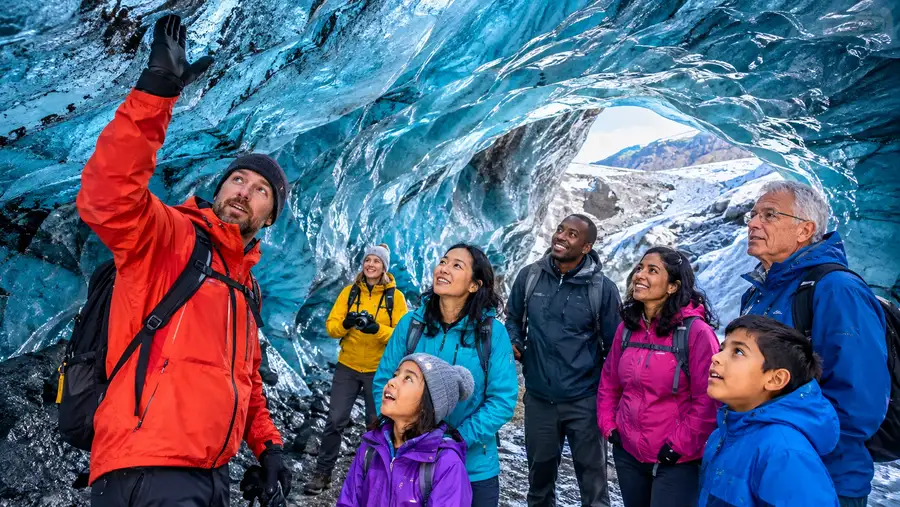
You cannot simply pull off the Ring Road and walk into this cave. The track crosses unbridged glacial streams, deep pumice sand, and boulder fields that swallow standard rental cars whole. If you are wondering about independent travel, can you visit Katla Ice Cave on your own without a commercial permit? The plain reality is no, unless you own a heavily modified rig on 40-inch tires and carry commercial crevasse rescue gear.
Most people pick between two main setups: joining a bus from Reykjavik or booking a Katla ice cave super jeep tour from Vik. Starting directly in Vík saves you roughly five hours of round-trip bus riding. It leaves room in your afternoon to check out the sea stacks at Reynisfjara or grab a bowl of hot lamb soup in town.
Packing properly makes or breaks your day on the ice. The temperature inside Katla hovers around 34 to 38 degrees Fahrenheit in summer, but the constant moisture makes it feel colder than that. Here is what you actually need on your body:
- Waterproof shell jacket: skip the water-resistant windbreakers, because glacial ceiling drips will soak through cheap nylon in eight minutes.
- Sturdy ankle-high boots: microspikes do not fit securely on flexible running sneakers or soft trail shoes.
- Waterproof over-trousers: sitting on wet super jeep steps or brushing against damp ice walls will leave your jeans frozen for hours.
- Synthetic base layers: wool or polyester keeps heat against your skin even when damp, while cotton locks in sweat and chills you instantly.
Pro tip: Bring cheap thin gardening gloves with rubber grip palms. Heavy ski gloves soak through when you touch the wet walls, while rubber-coated cloth maintains purchase on the damp safety ropes without slipping.
Book your katla ice cave tour experience:
What the Ice Actually Looks Like: Ash, Glass, and Light
If you expect the light sapphire blue arches seen in promotional photos of Vatnajökull, prepare yourself for a surprise. Katla is dark, moody, and raw. The ice is heavily laced with black tephra from the massive 1918 eruption and dozens of older volcanic events dating back over a thousand years.
In many passages, the ice looks like obsidian or carved jet stone. Bands of bright translucent blue poke through where the ice was under immense pressure and starved of air bubbles. When midday summer sun hits the cave mouth at an angle, the black bands look like zebra stripes suspended in solid crystal. It feels ancient. It smells like wet dirt, sulphur, and cold stone.
Autumn alters the lighting completely. By mid-October, the sun hugs the horizon all day long. Low golden beams strike directly into the cave mouth rather than filtering down from high above. The walls glow with an eerie amber reflection against the black volcanic strata, creating photographs that look nothing like standard winter glacier shots.
Dealing with Autumn Weather and Trail Conditions
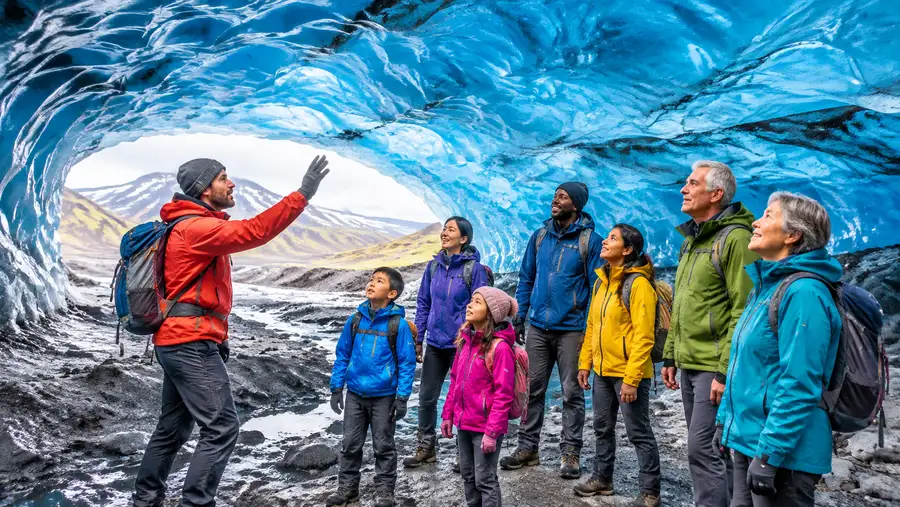
Late September through November demands flexibility. South Iceland weather has a reputation for ruining carefully made plans, and the approach to Kötlujökull exposes vehicles to fierce glacial winds that sweep unimpeded across the sandur.
The gravel hike from the jeep parking area to the cave entrance takes between 15 and 25 minutes depending on which entrance the guides are using this month. In July, this is an easy stroll over wet pumice sand. By late October, that same plain turns into a slick slurry of slush and hidden ice. Guides provide microspikes or crampons, but your ankles will do plenty of stabilizing work over the uneven hummocks.
- Check road warnings: monitor road.is and vedur.is every single morning before driving out of your hotel.
- Watch for sandstorm alerts: gale-force winds across Mýrdalssandur can strip the paint off rental vehicles within minutes.
- Pad your schedule: give yourself an extra hour of driving time between Reykjavik and Vík in late autumn to account for sudden hail and dark roads.
Tours do get canceled when gale warnings hit the coast. Safety guides make the final call based on wind gusts across the glacier tongue. Keep a buffer day in your South Coast itinerary so you can roll your booking over to the following morning if the weather turns sour.
Frequently Asked Questions about katla ice cave summer
Is Katla ice cave open in summer?
Yes. It is one of the only natural ice caves in Iceland accessible year-round due to the insulating volcanic ash layers of Kötlujökull glacier.
Does the ice cave melt during July and August?
The cave actively melts, creating running water, drips, and changing archways, but the structural integrity remains sound under daily safety monitoring.
What should I wear for a summer tour?
Wear fully waterproof outer layers, sturdy hiking boots with stiff soles, wool base layers, and light water-resistant gloves.
Can children visit Katla during the summer months?
Most tour operators allow children aged six or eight and older, provided they can walk unassisted over uneven glacial moraine for at least 30 minutes.
Is Katla better in summer or autumn?
Summer offers easier driving conditions and green surrounding landscapes, while autumn features fewer tourists, lower meltwater levels, and early northern lights opportunities.
Quick Reference
- Operating Season: Year-round (daily departures)
- Super Jeep Drive from Vík: Roughly 45 minutes each way
- Trail Hike to Cave: 15 to 25 minutes over rocky moraine
- Internal Cave Temp: 32°F to 38°F (0°C to 3°C)
- Key Gear Needed: Waterproof jacket, stiff boots, microspikes (provided)
Book your katla ice cave tour experience:
The Bottom Line
Visiting Katla outside the traditional winter window gives you a front-row seat to a glacier in motion. You trade the serene, frozen crystal vaults of January for roaring meltwater channels in July or moody, amber-lit tephra walls in October. If you find yourself driving the South Coast during the warmer months with hiking boots in your trunk, booking a seat on a super jeep out to Kötlujökull is easily one of the most rewarding detours you can take.
Read more about katla ice cave tour.